*Contains spoilers
We finally got the tournament, a show-stopping Johnny Cage, more fleshed-out characters, loads of gore, and a much bigger scale. Fans will surely have a good time.
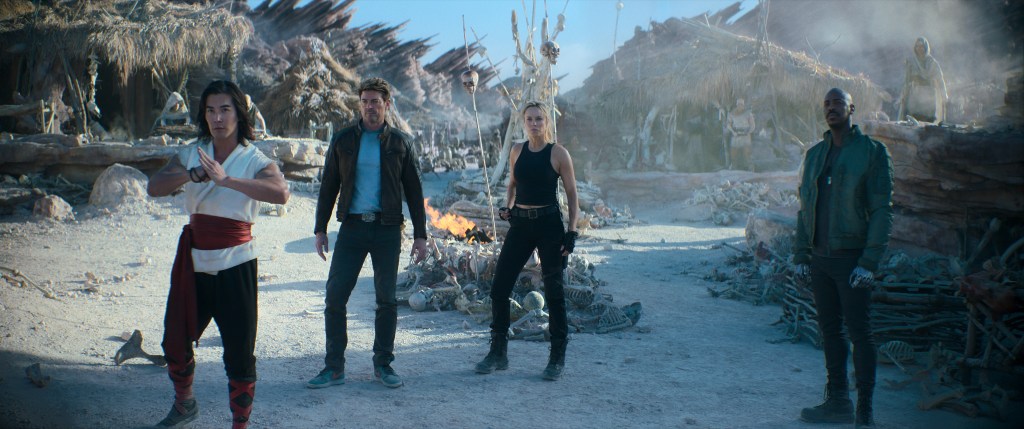
(L-R) Ludi Lin as “Liu Kang”, Karl Urban as “Johnny Cage”, Jessica McNamee as “Sonya Blade”, and Mehcad Brooks as “Jax” in New Line Cinema’s “Mortal Kombat 2,” a Warner Bros. Pictures release.
Loaded with fan service, the highly anticipated and explosive high-stakes live-action sequel builds upon the excitement after the original Mortal Kombat reboot was released in 2021 in theaters and on HBO Max. Stacked with bloody, brilliant, and complex fatalities, detailed and graphic fight sequences, and dazzling worlds taken straight from the games.
While it ultimately played it very safe, and could’ve upped the violence and gore up a few notches, the solid and highly entertaining popcorn blockbuster was full of brutal and gory, impressive fight sequences. We finally got the tournament, a show-stopping Johnny Cage, more fleshed-out characters, loads of gore, and a much bigger scale. Fans will surely have a blast.
From New Line Cinema comes the latest installment in the blockbuster video game franchise, MORTAL KOMBAT II, with Director Simon McQuoid returning to helm the follow-up to his directorial debut, Mortal Kombat (2021). The feature film adaptation of the iconic video game franchise of the same name comes from a screenplay by Jeremy Slater, based on the best-selling fighting game series created by Ed Boon and John Tobias.
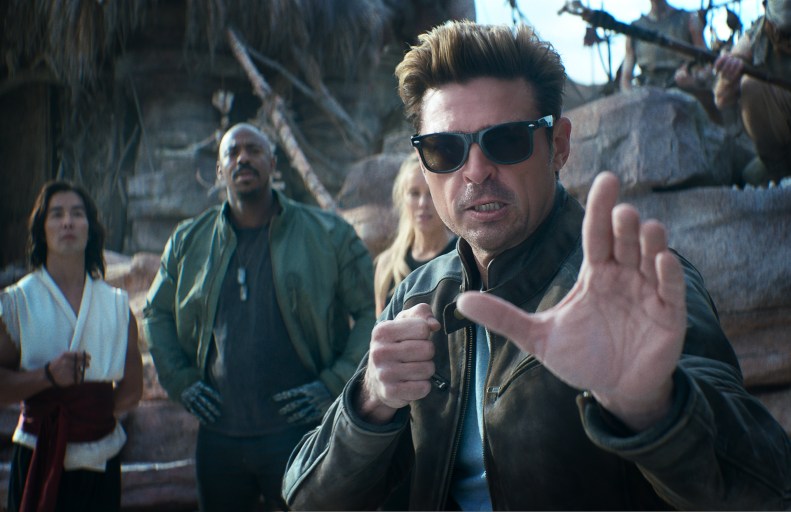
(L-R) Ludi Lin as “Liu Kang”, Mehcad Brooks as “Jackson ‘Jax’ Briggs”, Jessica McNamee as “Sonya Blade”, and Karl Urban as “Johnny Cage” in New Line Cinema’s “Mortal Kombat II,” a Warner Bros. Pictures release.
Mortal Kombat II ramps up the action as Earthrealm assembles a team of warriors to face a decisive, deadly battle against enemies from Outworld. This time, the story centers on Johnny Cage (Karl Urban) discovering his true destiny as one of the chosen fighters, and Kitana’s morality, shifting focus away from Cole Young’s character. It also introduces the realm of Edenia, featuring King Jerrod, Queen Sindel, Princess Kitana, and the looming threat of Shao Kahn.
MK II aims to raise the stakes by fully embracing the iconic tournament storyline, with Earthrealm’s champions facing Outworld in a brutal battle to stop Shao Kahn from conquering Earth. The sequel puts fan-favorite Johnny Cage, played by Karl Urban, at the center of the action alongside a large returning and expanded cast, including Adeline Rudolph, Jessica McNamee, Lewis Tan, and Hiroyuki Sanada.
The filmmakers describe the sequel as faster-paced, more emotional, and much larger in scope than the first film. Along with bigger fights and more graphic action, the story dives deeper into character relationships and slightly explores more of the franchise’s mythology, including the Netherrealm. The creative team emphasized wanting audiences to connect emotionally with the characters while still delivering the over-the-top combat and spectacle fans expect from Mortal Kombat.
They crafted not only amazing fights and dazzling worlds, but a more meaningful connection with the characters, at least with Princess Kitana. While audiences do get to sympathize with her tragic backstory, the overall trajectory is very baseline and follows a very simple paint-by-numbers narrative direction. It essentially jumps from scene to scene like gameplay as it teleports with each fight.
“The universe of Mortal Kombat is effectively controlled by a tournament. It’s a tournament that determines which realms will survive. At the end of the day, it comes down to combat. It comes down to one-on-one fighting.” – BOON
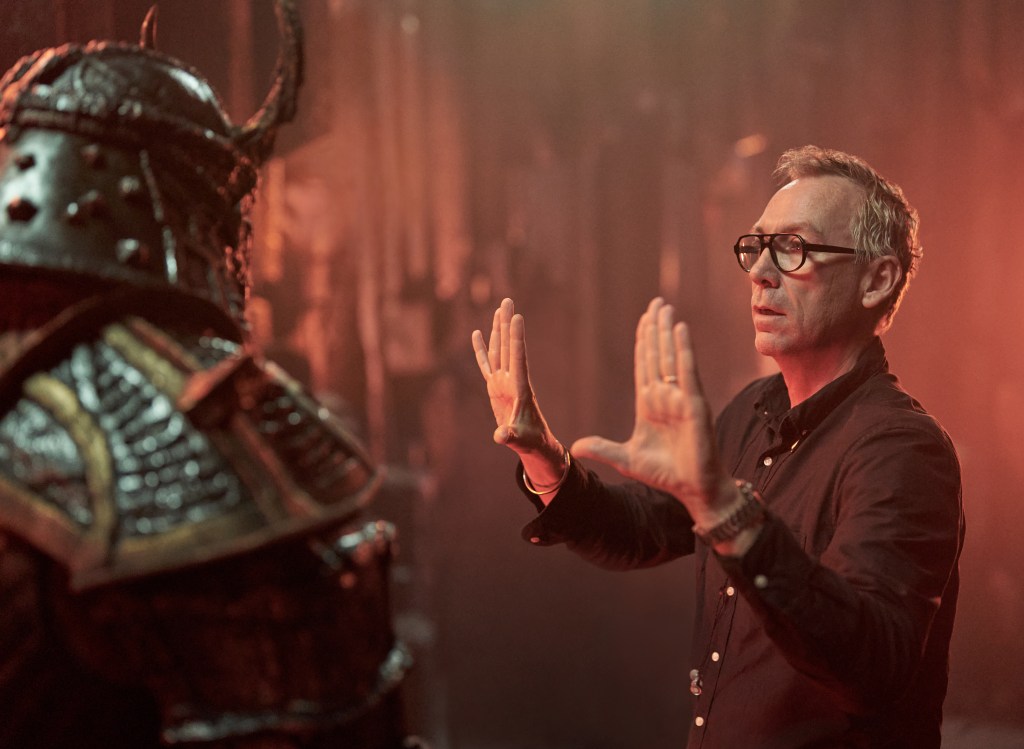
Caption: (L-R) MARTYN FORD as Shao Kahn and Director Simon McQuoid in New Line Cinema’s “Mortal Kombat II,” a Warner Bros. Pictures release.
One of the sequel’s biggest selling points is its renewed focus on the Mortal Kombat tournament itself, something fans haven’t properly seen on screen since the 1995 cult favorite Mortal Kombat adaptation by Paul W.S. Anderson. We do see some improvement, as the filmmakers even emphasized learning from the previous film’s mishaps. Director/producer Simon McQuoid was determined to meet the challenge head-on in creating an even bigger MK cinematic event for fans and moviegoers.
According to production, McQuoid said the team used lessons learned from the first movie to improve the sequel, focusing on expanding the scale and delivering a more polished cinematic experience. Producer Todd Garner echoed that sentiment, saying the goal was to surpass the original “in every respect” by listening closely to fan feedback.
Simon McQuoid and Jeremy Slater’s franchise reboot is ultimately a solid adaptation of the beloved Mortal Kombat series. Fans of the games will recognize several sequences and story elements pulled from multiple titles and combined into a new origin story. The previous film took creative liberties with the introduction of the new character Cole Young, played by Lewis Tan. As the only major character not drawn from the original games, Cole was connected to Scorpion as his descendant, but shifting the sequel’s focus toward more established fan-favorite characters feels like the right move.
This time around, the filmmakers decided to focus on Johnny Cage (Urban) as the action-hero protagonist and one of the central storylines. Johnny had a very surface-level, but entertaining arc as the tired, older, and “washed-up actor.” The sequel centers more on his over-the-top fighting style than Cole’s “plot armor” storylines. The irony of the film’s casting is that many fans argued Tan would’ve made a great Cage, and Urban a fantastic Kano, although Josh Lawson nailed the sarcastic, ruthless mercenary, and fans were ecstatic for his return.
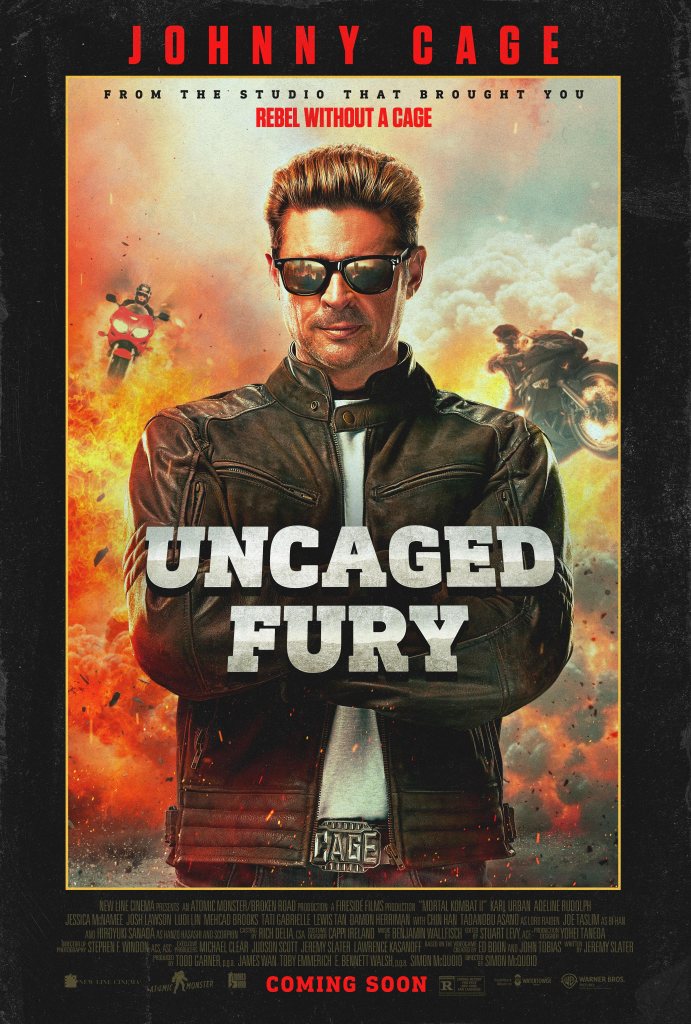
Film Name: MORTAL KOMBAT II
Urban, coming off of “The Boys,” the charismatic, rugged and wisecracking tough guy, who is no stranger to nerd culture, action, and fantasy roles, takes on the physically demanding role of the arrogant and witty Cage. He does deliver as the narcissistic and immature action-star who later becomes a brave and selfless defender of Earthrealm.
One of the most entertaining and nostalgic fan moments was the “Uncaged Fury” bit. The B-movie action star is something a lot of us grew up with in the 90’s. His first introduction is how his career is in the tank, and ultimately, we go from making fun of him to rooting for him as he finds his inner power on this lethal journey to defend Earth. You can tell he had a lot of fun with the stunt choreography as Cage’s fight style blends high-level martial arts, acrobatics, and Hollywood showmanship.
The character who is heavily inspired by Jean-Claude Van Damme mocks his opponents as he fights, adding another layer of comedic relief to the film.
Mortal Kombat II gives Adeline Rudolph’s Kitana a major emotional storyline alongside Johnny Cage’s arc. Kitana, the princess of Edenia, is portrayed as a powerful yet vulnerable warrior haunted by the murder of her father, King Jerrod, at the hands of Shao Kahn. Raised under Shao Kahn’s rule after her kingdom fell, she has secretly spent years planning revenge and searching for a way to free her people.
Kitana serves as the emotional core of the film, with her tragic past driving much of the story. The movie opens with Jerrod’s death, a key moment in Mortal Kombat lore, before jumping ahead 25 years to show how deeply the trauma shaped Kitana. As Shao Kahn prepares to invade Earthrealm and the tournament begins, her long-awaited chance for vengeance finally arrives.
McQuoid praised Rudolph’s performance, saying she captured both Kitana’s compassion and her inner strength, balancing grace and sensitivity with the fierce determination needed to confront Shao Kahn. Rudolph brought a vulnerable and sensitive strength to the character that also has a core of steel and will cut your heart out.
We see her reunited with her “Chilling Adventures of Sabrina” on-screen sister, Tati Gabrielle, who plays Jade, Shao Kahn’s assassin and Kitana’s bodyguard. Jade, who was also orphaned and raised in brutality as Shao Khan found her in fighting pits, later gave her life purpose with something to fight for. We see a nice balance of love and vulnerability with her and Kitana ending up like sisters. Throughout the story, their friendship is tested, and we also see another layer to Jade as she wrestles with her moral standing.
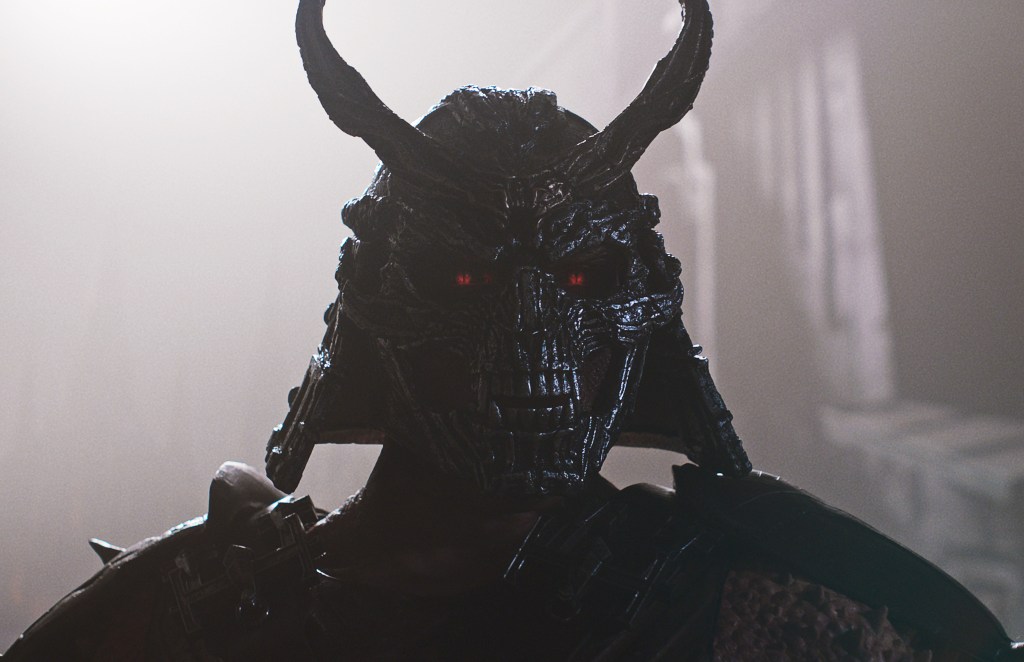
Caption: Martyn Ford as “Shao Kahn” in New Line Cinema’s “Mortal Kombat II,” a Warner Bros. Pictures release.
Mortal Kombat II positions Shao Kahn as a towering, menacing force whose presence dominates the story long before he enters the arena. Played by British bodybuilder Martyn Ford, the emperor of Outworld is portrayed as both physically overwhelming and strategically ruthless, a conqueror driven by ego, power, and the desire to add Earthrealm to his collection of defeated worlds.
At 6’8″ and over 300 pounds, Ford’s imposing physique, combined with elaborate prosthetics and armor design, gives Shao Kahn a genuinely larger-than-life appearance that immediately establishes the heroes as underdogs. Director Simon McQuoid praised Ford’s unmatched screen presence and dedication, noting that no other actor physically embodied the role the same way.
What makes this version of Shao Kahn especially effective is the balance between brute strength and intelligence. Ford describes him not simply as evil, but as deceptive and calculating, “a genius” whose ambition and ego fuel his conquest. The extensive four-hour prosthetics process also helped transform the character into a brutal fantasy creature with grounded realism, enhancing the intimidation factor every time he appears on screen.
While Shao Kahn dominates Mortal Kombat 2 with the film’s highest kill count, many of his earlier kills lack the over-the-top style fans expect. However, his final confrontation with Cole Young changes that completely. After Cole thinks he has defeated the nearly immortal emperor, Shao Kahn unleashes a brutal Fatality by crushing Cole’s head with his hammer and dragging the body across the arena floor. The scene delivers the savage spectacle fans wanted while also removing the divisive Cole Young character memorably.
Characters like Sonya Blade and Jax are noticeably underutilized in Mortal Kombat 2. Sonya (Jessica McNamee) finally gains her Arcana, allowing her to compete as an equal and take part in more dynamic fights, emphasizing the character’s strength and iconic status. However, despite this power upgrade, she remains largely sidelined in the broader story, overshadowed by Johnny Cage (Karl Urban) and a crowded ensemble cast, with limited screen time compared to newer focal characters.
Jax (Mehcad Brooks) is similarly underdeveloped in terms of narrative focus despite having a deeper character foundation. Brooks describes Jax as a hardened soldier shaped by multiple combat tours and long-term exposure to violence, with his sense of duty rooted in protecting Earthrealm at all costs. He frames Jax as someone who has internalized conflict to the point where “the hunt is in him,” channeling trauma and anger into heroic purpose. Even so, in the film’s structure, Jax’s complexity and arc are not fully explored, leaving him more as a supporting presence than a fully realized lead in the story.
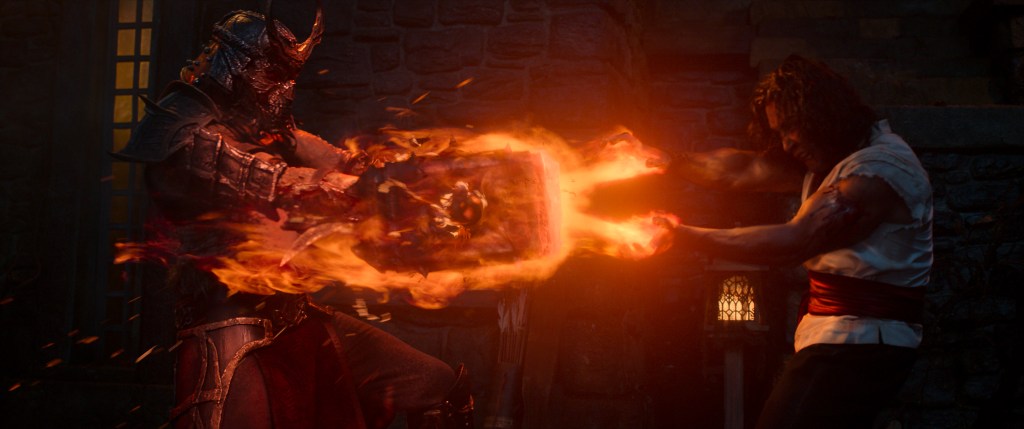
(L-R) Martyn Ford as “Shao Kahn” and Ludi Lin as “Liu Kang” in New Line Cinema’s “Mortal Kombat 2,” a Warner Bros. Pictures release.
The same fate lies with Liu Kang, who is the heart of the Mortal Kombat franchise. Although Kang, (Ludi Lin) had the most intense match-up delivering one of the film’s most memorable moments alongside Kung Lao, he still felt underutilized. Positioned as the emotional core and moral compass of Mortal Kombat, disciplined, loyal, and driven by grief and vengeance after losing his brother, the character still feels somewhat overshadowed within the larger ensemble.
His connection with Kitana adds emotional depth, as both characters are motivated by personal loss. Despite strong action and memorable matchups, the film ultimately lacks some of the heart and emotional charm that made the 1990s Mortal Kombat so enduring.
Lord Raiden, played by Tadanobu Asano, brings wisdom and the prominent supernatural presence to the film, with powers that allow him to guide Earthrealm’s champions across portals and into battle. As Earthrealm’s protector, Raiden recruits fighters like Cole Young in the first film and Johnny Cage in the sequel, believing in Johnny’s hidden potential even when others do not.
Despite Raiden’s importance to the story, the character suffers from limited screen time, leaving his presence and leadership underdeveloped. More importantly, the Earthrealm champions never fully feel like a connected team, lacking the camaraderie and emotional bond that made the 1990s Mortal Kombat so memorable. While the sequel delivers larger action and fan-service moments, it misses some of the heart and chemistry that gave the original its lasting appeal.
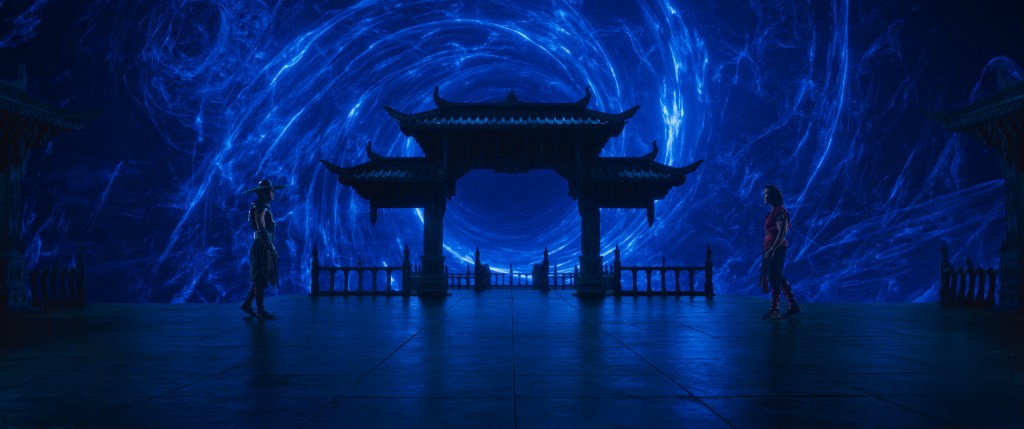
(L-R) Max Huang as “Kung Lao”, and Ludi Lin as “Liu Kang” in New Line Cinema’s “Mortal Kombat 2,” a Warner Bros. Pictures release.
While Mortal Kombat II may fall short narratively, it makes up for it with impressive stunt work, sharp wisecracks, pop-culture humor, fantastic costumes, and brutally entertaining fatalities. The filmmakers clearly focused on recreating the key elements that fans love from MK: authentic casting, game-accurate costumes, signature moves, detailed stages pulled directly from the games, and graphic kills inspired by the series’ iconic fatalities. The environments are used especially well during the fights, helping deliver complex, exciting, and visually brutal action sequences that feel true to NetherRealm Studios’ lore and style.
The sequel leans more heavily into comedy and crowd-pleasing moments than deep exposition or mythology, often favoring fast-paced action and one-liners over expanding the franchise’s rich lore. In many ways, the film plays things safe, though its pacing and runtime feel stronger and more focused than its predecessor.
While the violence and gore could have been pushed even further (take a page from Invincible), the film still delivers plenty of graphic, detailed combat for longtime fans. There’s also a fun appearance from Ed Boon, adding another exciting nod for dedicated fans of the franchise, as Ed Boon helped turn Mortal Kombat into a pop-culture phenomenon and cemented the word ‘fatalities’ into the pop culture lexicon forever. The Tournament flames also added a clever aesthetic that gamers will enjoy.
One of the biggest strengths of Mortal Kombat II is its ambitious stunt work and large-scale production design. With the story centered around the actual tournament, the sequel features far more fight choreography and action than the previous film. The cast underwent extensive physical training, while stunt coordinator Kyle Gardner helped shape the brutal, fast-paced combat sequences into some of the film’s standout moments. The fights are bigger, more detailed, and feel authentically pulled from the games.
The production design also significantly expands the world of Mortal Kombat by exploring multiple realms and iconic arenas fans will instantly recognize. Production designer Yohei Taneda crafted massive practical sets for Edenia, the Sky Temple, Netherrealm, The Pit, and Deadpool, each with its own distinct visual identity. Edenia blends European and Asian influences, evolving from a beautiful kingdom under King Jerrod into a darker world under Shao Kahn, while Netherrealm takes on a surreal, sci-fi-inspired design influenced by artist M. C. Escher. The environments feel detailed, immersive, and alive, adding scale and atmosphere to the film’s action.
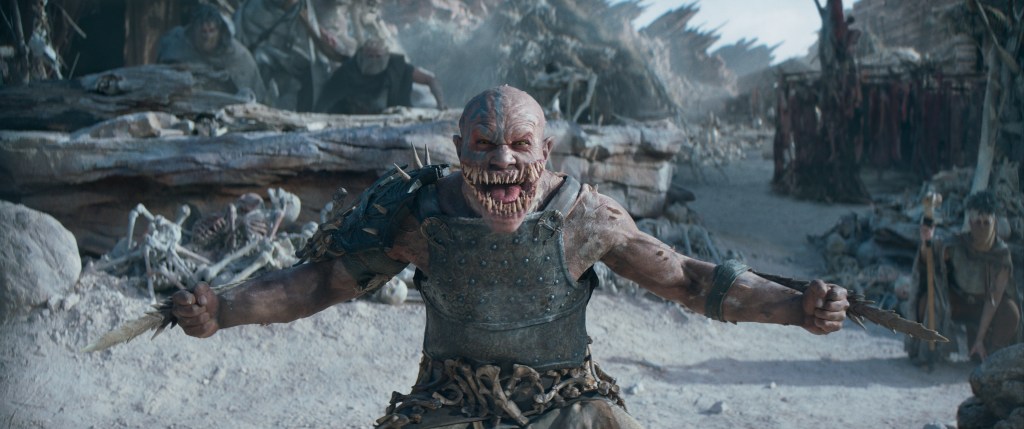
C.J. Bloomfield as “Baraka” in New Line Cinema’s “Mortal Kombat 2,” a Warner Bros. Pictures release.
Costume designer Cappi Ireland also leaned heavily into cultural authenticity and game accuracy, drawing from Chinese and Japanese influences to shape characters like Liu Kang, Kung Lao, Shang Tsung, and Scorpion. The result is a sequel that succeeds visually and physically, delivering the scale, style, and brutal spectacle fans expect from Mortal Kombat.
Mortal Kombat II ultimately feels more like a series of matchup set pieces and game stages than a tightly structured film, but it still succeeds as a fun and highly entertaining adaptation of the beloved Mortal Kombat. Packed with fan service, Easter eggs, and nods to both the games and the original 1990s film, the sequel delivers adrenaline-fueled action, complex and graphic fatalities, and large-scale worlds pulled straight from NetherRealm’s lore. Fans finally get the long-awaited tournament, a scene-stealing Johnny Cage, more fleshed-out characters, and brutal fight sequences that are bigger and bloodier than before.
At the same time, the film plays things very safe narratively, often rehashing themes and plot points from the first movie while leaning heavily on spectacle over emotional depth, lore, or character connection. The Earthrealm team lacks some of the heart and chemistry that made the 1990s Mortal Kombat so memorable. While the action is consistently impressive, the movie relies heavily on CGI effects, including fireballs, lasers, and digital environments, sometimes at the expense of practical effects and grounded brutality. Some moments including Kitana’s standout kill sequences shine through, but the film could have pushed the gore and practical effects even further, especially considering producer James Wan’s involvement.
OVERALL: 7/10
Despite its simple story, uneven dialogue, and CGI-heavy presentation, the sequel remains a solid popcorn blockbuster that understands what fans came to see: brutal fights, over-the-top fatalities, iconic characters, and nonstop ass-kicking.