Spoiler-Free
At its core, Your Mother, Your Mother, Your Mother cares less about the mechanics of action than about the emotional weight of faith, grief, fatherhood, and mercy.
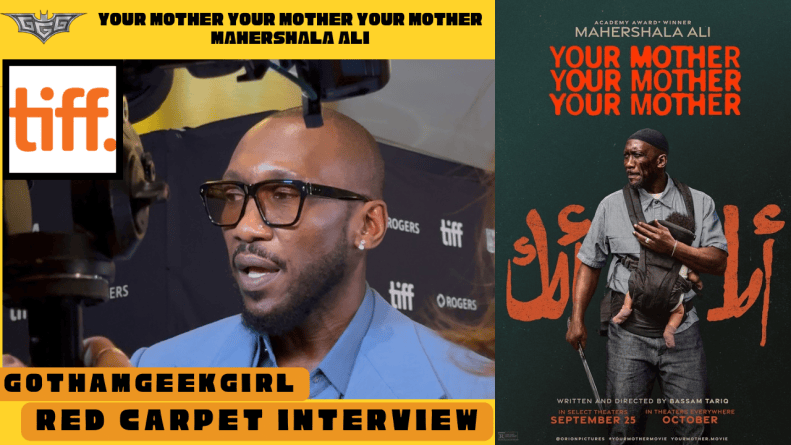
The highly anticipated action thriller Your Mother, Your Mother, Your Mother, written and directed by Bassam Tariq (Mogul Mowgli), premiered at the Toronto International Film Festival (TIFF).
The original action drama puts Oscar-winning Mahershala Ali’s (Moonlight, Green Book) commanding presence and physique back on display in a role that feels like an unexpected answer to the Blade movie audiences never got. (Shame on Marvel) But while Tariq puts Ali’s action-star training to work, Your Mother is less interested in creating another unstoppable superhero than in examining what happens when a man used to taking lives is suddenly forced to devote himself to protecting them.
The film plays with expectations surrounding Ali’s almost-casting as Blade, but it ultimately does something very different with his physicality. At its core, Your Mother, Your Mother, Your Mother cares less about the mechanics of action than about the emotional weight of faith, grief, fatherhood, and mercy.
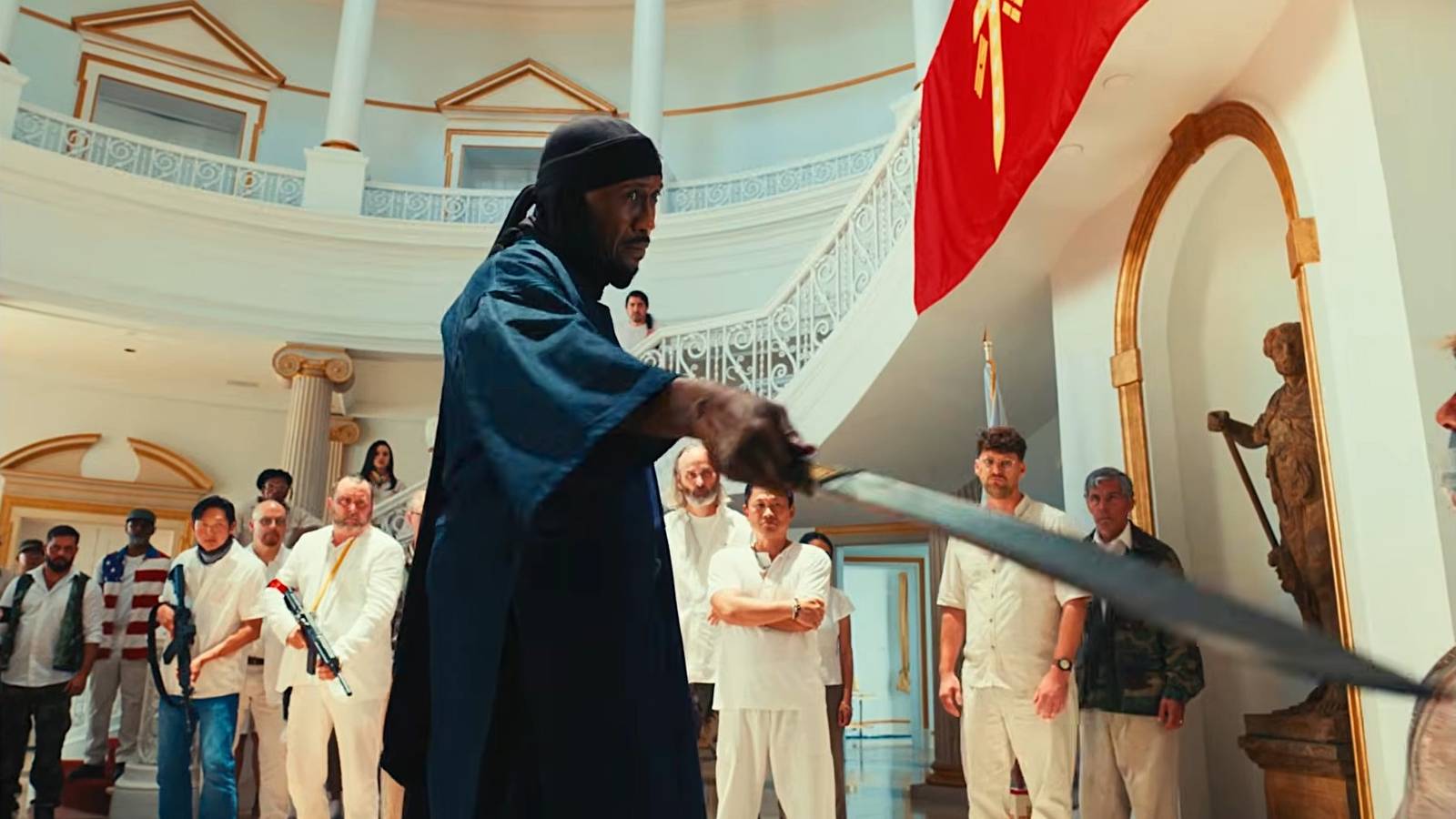
While director Bassam Tariq and Mahershala Ali deliver an utterly badass, sword-wielding hero, Your Mother is not the Blade movie people may be expecting. Instead, it is something entirely unique and special on its own terms. Ali completely commands the role of Latif, a man of faith grappling with consequences and revelations about himself. The action is iconic but sparse; the real standout is Latif’s relationship with his children, as well as the film’s deep conversations about mercy and the nuances of polarizing religious beliefs.
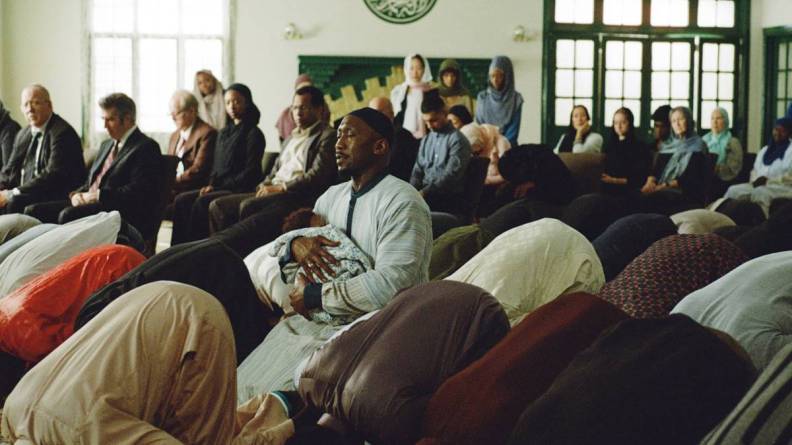
Meet Latif, a devout Muslim, widowed father of three, and contract killer.
Latif struggles to balance both worlds, as a devoted father and a highly disciplined hitman who has built his own moral code around violence. He never uses guns and only targets people he believes the world is better off without. But after his wife dies, his carefully controlled life begins to fall apart. Latif wants to leave his life as a hitman behind and focus on his three children: teenage Fatiha, preteen Qadir, and newborn Aziza.
His immediate problem is much more intimate than his hidden violent objectives. Aziza refuses formula and desperately needs breast milk. What begins as a simple mission to find milk for his baby becomes a chaotic journey across Houston, pulling Latif back into the criminal underworld he has been trying to leave behind. That contradiction becomes the film’s central conflict. Latif knows how to kill, but he does not know how to parent alone.
His ordinary responsibility as a father becomes the trigger for the larger action plot, giving the story more of a human motivation rather than making the action feel like an excuse for fights. Latif’s longtime employer, Mike (Laith Nakli), has other plans for him though. Latif wants no part in Mike’s nephew’s escalating feud with the extremist cowboy pastor Hwan Yoon (John Cho), but as his hitman past comes back to haunt him, he may have no other choice. Latif must battle through dangerous thugs and religious zealots while trying to keep his deadly profession secret from his grieving children.
While there are some notable fight scenes like the gripping opening bathroom sequence, the action is surprisingly restrained. The violence arrives in short, explosive bursts rather than consistent fight sequences, often preceded by well-placed musical drops that signal ish is about to go down. Whenever Latif finally unleashes himself, Ali absolutely makes the choreography count. His movements are controlled, brutal, and precise, offering glimpses of the action star audiences might have seen had his version of Blade made it to the screen.
But the action is never really the point.

Latif is “very conscious of his intentions, and as often as possible, there is an intentionality one has to have when using a sword. It’s very direct, very conscious, and I don’t think you have to have that same intentionality the further you get from somebody – a gun allows you to have distance, it can do all kinds of things it can hit anyone. I think theres less intentionality around that and I think Latif is a very conscious and accountable man.” – Mahershala Ali
Ali’s performance is most compelling in the moments without the gritty violence. He balances between straight murking, religious devotion, grief, guilt, and tenderness without turning Latif into a simple contradiction. His physicality makes the character believable as a feared killer, but his quieter scenes reveal a man struggling with his faith and what remains of his identity after losing his wife. Latif rarely displays his grief, but instead it lingers beneath his attempts to provide for and protect his family, while maintaining some sense of normalcy.
The film’s emotional core lies in its deep spiritual and familial themes, especially Latif’s bond with his children and the daunting reality of navigating parenthood alone. Fatiha (Adia) is a strong-willed teenager navigating grief, self-discovery and questions about her own faith while trying to understand her father. She delivers an exceptional performance balancing being a teen and having a sense of resentment while taking on more offloaded responsibilities.
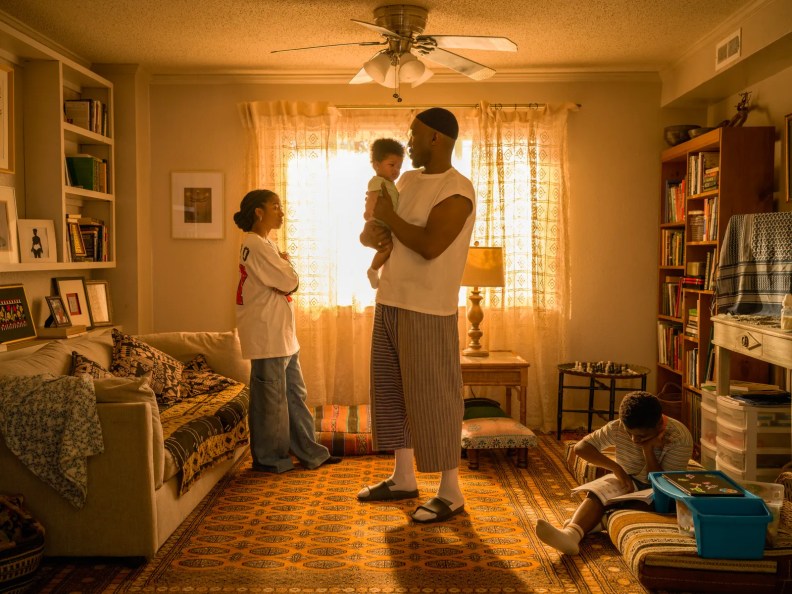
Qadir (Jahleel Kamara) adds another phenomenal performance and layer to Latif’s responsibilities, struggling to deal with the day-to-day of losing his mother and being a kid raised in the Mosque. While newborn Aziza’s basic need for survival sets the entire story in motion, each child represents a different part of the life Latif is struggling to hold together.
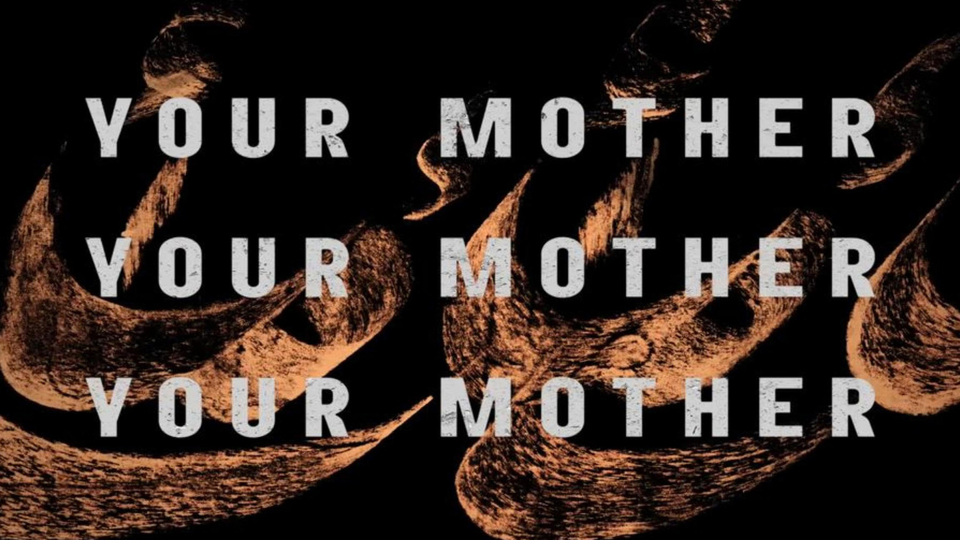
The opening voiceover and dialogue-driven narration, reminiscent of “Lone Wolf and Cub,” are performed by actors Adia (Fatiha) and Jahleel (Qadir). The voiceover recounts an Islamic hadith in which a man asks the Prophet Muhammad who deserves the best treatment. The Prophet repeatedly answers, “Your mother.” We’ll get back to the hadith later.
Latif’s journey also echoes themes of the Lone Wolf and Cub tradition, particularly in its philosophical and spiritual journey, while contrasting brutal violence with tender moments of parental protection. However, Tariq shifts the emphasis away from the warrior’s mythology and toward the devastating reality of the parent left behind. Latif isn’t simply protecting his children from the world; he is trying to become someone capable of guiding them through it.
That question leads directly to the film’s deeper themes, faith.
Latif’s religious devotion isn’t simply a character detail. His entire understanding of Islam informs the way he thinks about morality, responsibility, and violence. He has constructed a personal code that allows him to believe there are people whose deaths serve a greater good. But becoming a widower and sole parent makes that ideology difficult to maintain. The film repeatedly places Latif in situations where the distinction between justice, revenge, and personal judgment becomes harder to define. This is where mercy becomes essential.
Beneath its action-thriller exterior, Your Mother asks a more difficult question: Can a man who has built his identity around deciding who lives and dies learn to choose mercy when his children need him to become something else? Latif’s struggle is not simply to escape the criminal world, but to confront the beliefs that made violence possible and determine whether faith, grief and fatherhood can lead him toward a different way of living.
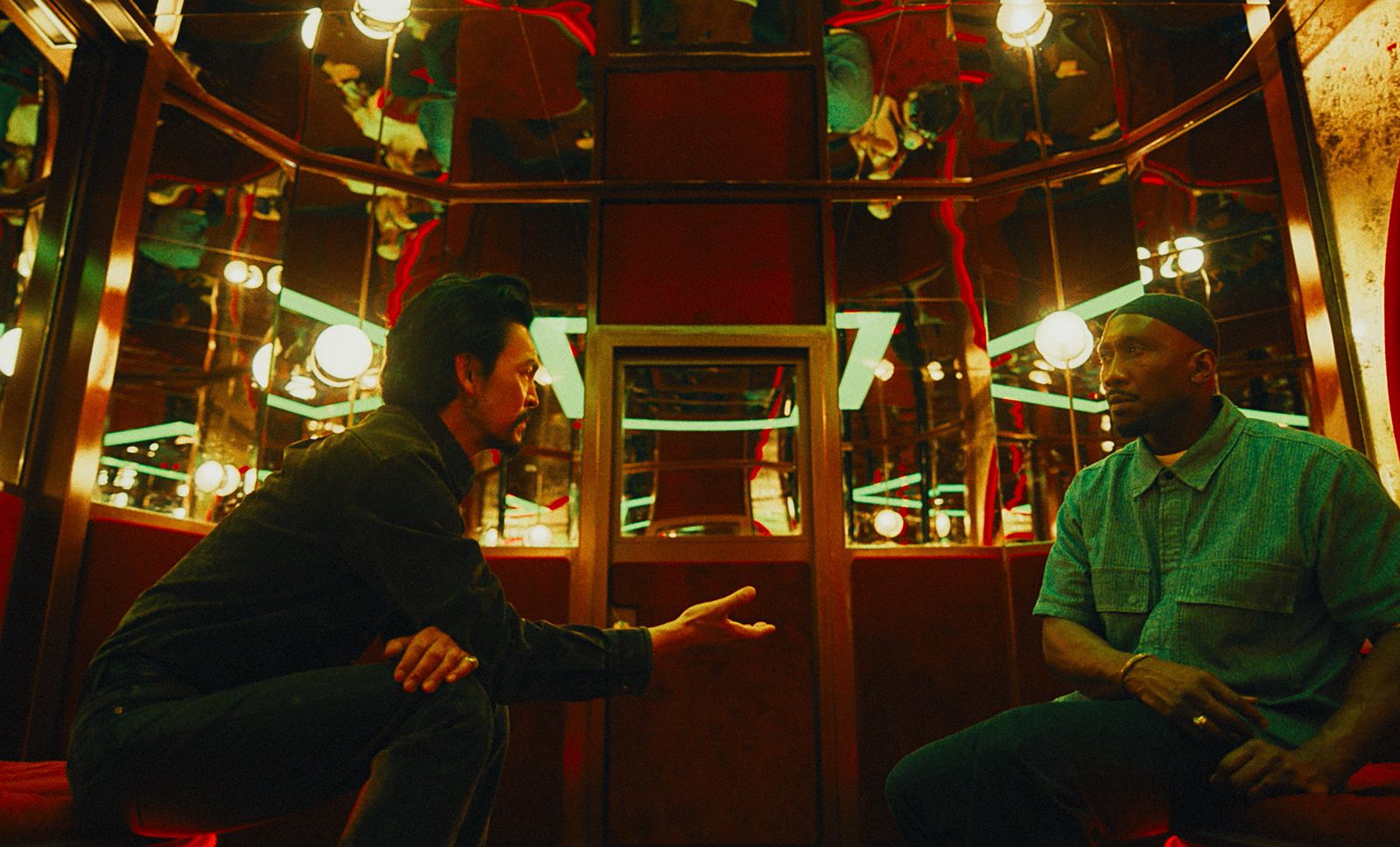
Latif’s employer, Mike, represents the criminal life that he is trying to leave behind, and the people determined to pull him back into it. Latif is assigned to protect Mike’s nephew Hatty (Abubakr Ali), a sex-crazed eccentric Muslim influencer (what a conundrum) who has pissed off the super-conservative extremist pastor Hwan Yoon. Hatty’s character also questions his faith, fundamental principles, and higher power.
Now Latif is drawn into a political and religious conflict with Hwan Yoon (John Cho), a dangerous, gun-worshiping evangelical ex-Marine who founded the radical motivational Church of Divine Fire. John Cho is unhinged, manic, and brings such a nuanced approach to his villainous performance as a deep believer.
– “Coming at his character as how faithful he is and how much a believer he is, not making him a crook or evil but making him a believer and playing with that.” – John Cho
Through these opposing belief systems, Tariq expands the film’s central conflict. Mike represents Latif’s past, while Hwan Yoon offers an ideological counterpoint, challenging Latif’s understanding of faith, morality, and violence. Together, they deepen the film’s questions about what people are willing to do when they believe their violence is justified.
However, this is where the film’s larger message becomes muddied. Its exploration of religion, particularly the contrast between Christianity and Islam and its portrayal of Muslim characters, introduces ideas that aren’t always clearly developed. As the film moves between faith, morality, and violence, its broader point about what it wants to say ultimately becomes difficult to discern.
The title itself draws from a well-known Islamic hadith (a recorded saying, action, or silent approval attributed to the Prophet Muhammad), emphasizing the importance of mothers and parents. In the film, the repeated “your mother” takes on deeper meaning after Latif loses his wife, forcing him to confront both his children’s grief and the role he must now fill as their father. The title ultimately reinforces the film’s larger exploration of motherhood, loss, and fatherhood. “It’s frequently cited to teach the importance of treating our parents with kindness and compassion. It’s a narration that Muslims know by heart,” according to Temple of Geek’s Suhaila, who describes the film’s Muslim influences.
That makes the film’s title more than a religious reference. It becomes part of the film’s larger question about what remains after a mother is gone, and what a father must become in her absence.
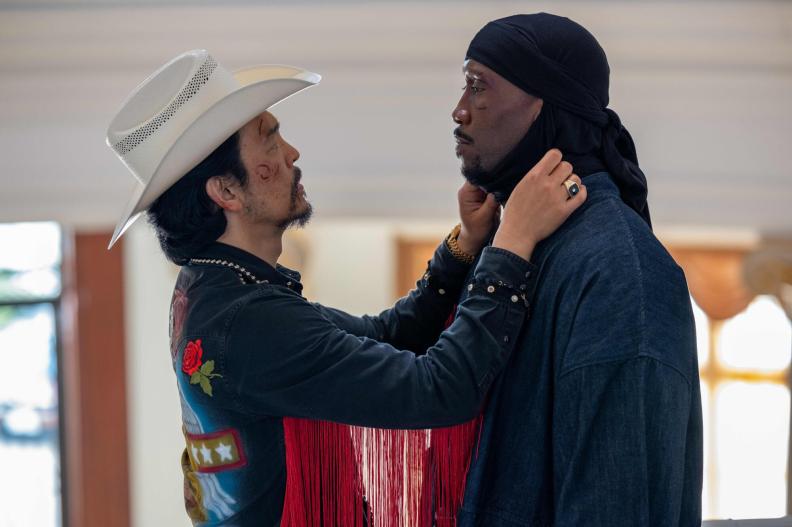
While it is tempting to watch Ali kickass and wield a blade and to imagine the Blade movie that never happened, Your Mother, Your Mother, Your Mother ultimately makes a more interesting choice with that physicality. Tariq uses Ali’s action-star presence not to create another invincible hero, but to explore a man whose greatest challenge isn’t surviving a fight. It is learning how to live with grief, confront the limits of his moral code, and become the father his children need.
The film may arrive dressed like an action thriller, but its real conflict is much quieter: Can a man who has spent his life deciding who deserves to die learn what it means to show mercy and, ultimately, how to live for someone else?
Your Mother, Your Mother, Your Mother turns its action-thriller framework into an intimate story about what grief demands of a father when the life he once understood no longer fits the family he must protect.
Overall 8/10
Mahershala Ali slays as Latif, a man of faith navigating consequences and revelations about himself. The film explores deep conversations about mercy, faith, and the nuance of polarizing religion. While the action is iconic yet scarce, the real standout is the relationship between Latif and his kids, with stellar performances from Adia and Jahleel Kamara. John Cho is completely unhinged and makes a perfect complex antagonist.
Your Mother Your Mother Your Mother | Official Trailer
#MahershalaAli #AmazonMGM #YourMotherMovie
”I thought I was Your sword, now I have to fill her shoes.” Watch the trailer for Your Mother YourMother Your Mother, in select theaters September 25, everywhere October.